
Sheero |Sooji Ka Halwa
Recipe: Sheero |Sooji Ka Halwa
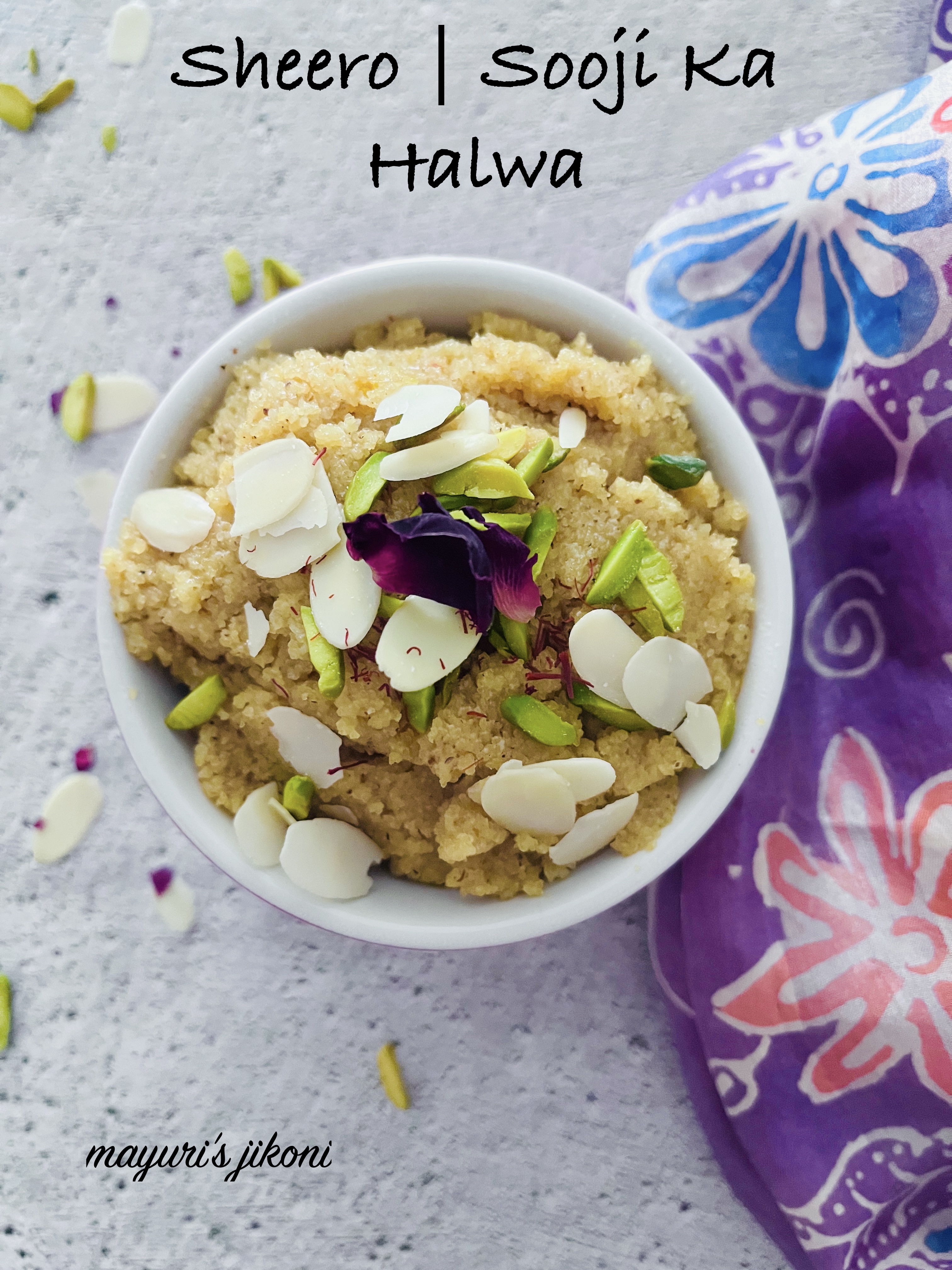
Sheero |Sooji Ka Halwa is a popular Indian sweet or dessert made from semolina, saffron, cardamom and ghee. Absolutely delicious, melt in the mouth and comforting mithai, it is generally prepared for festivals and happy occasions. Easy to make, some use water to prepare the sooji ka halwa and some use milk. Sheero or shiro is the Gujarati name for sooji ka halwa and we usually prepare it using milk.
Memories
I like to prepare sheero for Ram Navmi and Bhai Beej. Ram Navmi is the birth date of Shri Ram Bhagwan. Bhai Beej, bhai dooj or bhav bij is a festival like Raksha Bandhan, a day dedicated to the love between brothers and sisters. Normally on this day brothers are invited by the sisters for a hearty meal. A tilak and arti is performed and in return the sisters get a gift. The spirit of love and togetherness is celebrated on this day. I don’t have my brothers living near me but I celebrate this day by offering sheero to Lord Krishna.
At this juncture I have to mention that the best sheero I’ve ever had is when there is a Satya Narayan Katha. The method of making the halwa is same but somehow it just tastes so different. The other place where the sheera is awesome is at the Sikh Temple in Makindu, Kenya. It has been years since I last went there, but I remember we use to get nice buttery warm shiro as prasad whenever we visited the Gurdwara. Back then the sheera was made with salted KCC butter which gave it a unique flavour. Don’t know if they still use butter nowadays.
Sharing This Recipe With Foodies_Redoing Old Posts
I make sheero often but would forget to take photos. The opportunity came when I made Sheero as part of the bhog offering for Shri Ram Bhagwan of the occasion of the opening ceremony of the Ram Temple in Ayodhya. Have updated this post with better photos, write up and a video. This recipe was first posted on 15/11/2012

You May Like To Check Out Some More Traditional Indian Sweets |Mithai


Ingredients Required For Sheero |Sooji Ka Halwa
Semolina – also known as sooji, suji, rava. Use either fine or medium grain sooji.
Ghee – clarified butter. Don’t skimp on the amount required. You need enough ghee to roast the semolina properly and also for that smooth velvety texture of the sheero.
Milk – I use 3% milk.
Sugar – I prefer to use normal white granulated sugar. You may use brown sugar or jaggery if you wish. However, it will change the colour of the halwa.
Cardamom Powder – elachi or eliychi powder. Add according to your taste.
Saffron – threads or powder. Add according to your taste. This is an optional ingredient.
Raisins – I love adding raisins to sheero. Some people don’t like. The choice is yours. I have given the quantity as a rough guidance.
Almonds – roughly chopped or sliced. Add some in the sheero. Leave some for garnishing.
Pistachio – roughly chopped or sliced.


Watch How To Make Sheero | Sooji Ka Halwa

SHEERO |SOOJI KA HALWA

Ingredients
- ½ cup semolina
- 1½ cups warm milk
- ⅓ cup sugar
- 2 tbsp almond slivers
- 2 tbsp pistachio slivers
- ½ tsp cardamom powder
- ⅛ tsp saffron
- ¼ -⅓ cup ghee
- 2 tbsp raisins
Instructions
- Heat milk in a pan till it becomes hot. Add sugar, cardamom powder and saffron. Keep the milk hot by leaving it on very low heat till the semolina gets roasted.
- Heat ghee in a pan over low heat.
- Add the semolina and roast it in the ghee till it turns brownish in colour. Stir it constantly to avoid the semolina from getting burnt. This takes about 10 minutes over low heat. Do not roast the semolina over high heat.
- Make sure you roast the semolina well. If you leave it white, it will taste raw. For the melt in the mouth kind of sheero you have to roast the semolina properly.
- Add the raisins and stir fry till they plump up.
- Add the hot milk mixture little by little. Be careful when you add the milk as it will splatter and hot steam will come out.
- Stir the mixture till it becomes like a soft paste and comes away from the sides of the pan.
- Take the pan off the heat.
- Add some almond and pistachio slivers or chopped. Leave some for garnishing.
- Garnish with the pistachio and almond flakes and serve piping hot.
Notes
- I prefer to use slightly coarse semolina for this recipe to give a more grainy texture. But when not available, I use fine semolina.
- If you cook the sheero ahead and it becomes slightly hard, add a bit of milk when you heat it up.
- Add or omit raisins according to your preference. I love to have a bit more in mine.
- I find ⅓ cup sugar just right. Add ½ cup if you like sweeter shiro.
Pin For Later

A Small Request:
If you do try this recipe then please either
add a comment below,
send a picture to my email mayuri.ajay.patel62@gmail.com
tag me as #mayuri_jikoni on Instagram
or tag me on Twitter as #Mayuri1962



10 Comments
Priya Srinivasan
March 9, 2024 at 1:57 pm
Wow mayuri ji, sooji halwa looks inviting! Boiling milk and sugar and then adding it to roasted sooji is brilliant idea! I have never tried this way. Love the texture of your halwa! I will try this way next time i make!
mayurisjikoni
March 13, 2024 at 7:38 am
Thank you so much Priya. We always make sheero with milk, and got to know that it can be made with water too when I started blogging. I still prefer it with milk.
Renu
March 14, 2024 at 3:07 pm
Wow, you add almost 3 times of milk. I keep it to 1:1 or 1:1.5, I will try with this ratio next time, as my daughter loves it like that. I was trying to get a glimpse of that thali, do upload the whole pic, so that we can enjoy the food pics 🙂
mayurisjikoni
March 15, 2024 at 11:57 am
Thank you so much Renu. When ever we prepare sheero for offering to God, we usually add 3 times milk quantity. And somehow the sooji just soaks it up. I’d made the whole thali for the Ram consecration ceremony in Ayodhya.Hopefully will post it before Ram Navmi.
Radha
August 12, 2024 at 9:35 pm
I always make the south Indian version. Adding milk makes it extra rich. This sheera is perfect for any festive occasion and I am trying this version for the upcoming vratam. Thanks for sharing the delicious recipe. The clicks are amazing!
mayurisjikoni
August 13, 2024 at 5:12 pm
Thank you so much Radha. Sooji ka halwa is perfect for any celebration.
Neha (My Culinary Expressions)
August 13, 2024 at 2:05 am
Suji halwa is our favorite too. Apart from making as an offering, we make it as a weekend breakfast with puri. Blissful! What my takeaway from your post is warm milk. I have never made Sooji ka Halwa using milk. This weekend I plan to make it, since festivities are on. this time, I will try adding warm milk for a richer texture. Very captivating pics.
mayurisjikoni
August 13, 2024 at 5:11 pm
Thank you so much Neha, we always make suji ka halwa with milk. It turns out with a more creamier softer texture. Enjoy 🙂
Rekha
June 22, 2025 at 11:49 am
Tried this and it worked perfect . I used dates ( 3/4 cup chopped ) as sweetener as my guest is diabetic . I loved the idea of using hot milk in the roasted semolina . Definitely making this again .
mayurisjikoni
July 28, 2025 at 7:59 pm
Thank you so much Rekha for trying out the recipe. I will try out the recipe using dates.