


EVENT: FOODIEMONDAY/BLOGHOP
THEME: #165 NAVRATRI SPECIAL
RECIPE: FARALI KUTTU KHICHDI/ BUCKWHEAT KHICHDI
What is Farali Kuttu Khichdi/ Buckwheat Khichdi
For Farali Kuttu Khichdi/ Buckwheat Khichdi, legumes are not used but buckwheat is cooked with potatoes, herbs, spices and nuts. According to the Hindu culture, the word farali refers to any food that is can be used during Fasting Days. Besides the Ekadashi fasting that comes twice a month, Navratri fasting is another one where many communities follow the rule of not consuming grains, pulses, legumes, cereals and certain vegetables.By the way, Kuttu is the Hindi word for Buckwheat. Since buckwheat is not a grain it is a farali ingredient. Usually, khichdi is a dish where any legume and rice are cooked together.
What is Navratri?
Nav means nine in the Hindi language and ratri means nights. So, Navratri is a Hindi festival that is celebrated over nine nights. Different parts of India celebrate this festival in different ways. But one thing is common and that these nine nights are celebrated in honor of Goddess Durga and her nine avatars.
Celebrate in North East and East India
In the northern east and East part of India Navratri is celebrated as Durga Pooja. During these nine days Durga Ma is worshipped with religious rituals, food offering, dance and merriment. Therefore, Its a time for fasting and religious rituals for many all over India.
In Gujarat or for Gujaratis
For Gujaratis it means garba and dandhia (dance). For most Gujaratis these 9 days of fasting means no grains or pulses are consumed along with many of the beans and other vegetables. The dishes one can prepare are exactly as the same as the ones we make for Ekadashi or Farali. There are some who fast 9 days without taking any salt and eat only fruits, nuts and milk.
What is Buckwheat?
Buckwheat is not related at all to wheat. In fact its known as a pseudo cereal. The name buckwheat comes from the tree beech as the buckwheat seeds resemble the beech nuts of the beech tree, triangular in shape. Why is it not a cereal or grain? Well, because buckwheat plant is related to sorrel, rhubarb and knotweed and its actually a fruit seed. Buckwheat is commonly used during fasting. The flour is more commonly used to make puris, pakodas, dosas or chilas, dhokra etc. The whole seeds or groat as its called can be used to make khichdi or porridge.
It is believed that the domesticated version of buckwheat was first planted 6000BCE in the inland of South East Asia and it spread from there to other parts of Asia and Europe. Its used to make soba noodles, the Russians make blini (pancakes) from it and is used to make crepes in France.
Advantages of Including Buckwheat in your diet:
- Its healthy, light on the stomach. Doesn’t leave you bloated
- Its gluten free
- Low in calories
- Rich source of protein
- Has a good amount of dietary fiber
- Low Glycemic Index – which makes it ideal for diabetics
- Contains antioxidants
- A good source of Vitamin B and magnesium, manganese and phosphorus
FoodieMonday/ Bloghop Group:
The group unanimously decided Navratri Special as the 165th theme. As I mentioned, different regions of India celebrate Navratri in different ways. While Gujaratis and some North Indians consume only Farali Food, in South India Sundals is a must. Sundal is a traditional South Indian Dish that is specially prepared for Pooja or offering and usually is made from legumes. Other parts of the regions will refrain from meat, fish, eggs, while some will not even have onion and garlic for those nine days. As for me, since we follow the only Farali Food tradition, I decided to use buckwheat groat to make farali kuttu khichdi / Buckwheat khichdi.


Some Farali Dishes that you may want to check out:
- Enjoy a healthy and filling salad during the fasting days : Apple Avocado Quinoa Salad
- Start the day with a healthy but filling breakfast with Saffron Tapioca Pudding
- Or Enjoy a nice thick flavorful lassi (yogurt smoothie) – Peach Cardamom Lassi
- Enjoy Samo Tikki/ Barnyard Millet Pattis as a snack
- I personally love to have Rajgira Thalipeeth – a flatbread made from amaranth flour, mashed potato and spices
- Baking some fasting freshly cookies was a good way to encourage kids to fast. I usually make Fig and Amaranth Cookies
- My family loves Sabudana Vada, fried snack with tapioca pearls and potato
- Fasting is incomplete for us without Moriyo Khichdi/ Barnyard Millet Khichdi
- We get plenty of fresh cassava so I make Cassava in Coconut Milk often and Fried Cassava.
- As offering or Prasad to Durga Ma we prepare Samo Kheer, Coconut Barfi, Peanut Ladoo ,and Rajgira Halwa
- Renu prepares Farali Dhokla using buckwheat and water chestnut flours.
Ingredients required for Farali Kuttu Khichdi/ Buckwheat Khichdi
- Buckwheat Groat
- Potatoes –
- Peanuts – roasted and lightly crushed
- Fresh Mint
- Fresh Coriander
- Green Chilllis – amount depends according to your taste
- Ginger
- Cumin Seeds – jeera
- Sesame Seeds – tal or simsim avoid if you don’t have it for fasting
- Cinnamon Powder – taj powder
- Clove Powder – laving powder
- Water – to cook the buckwheat
- Oil/ Ghee – use only sunflower oil, olive oil or ghee
- Fresh Curry Leaves
- Sugar – optional
- Lemon Juice
- Salt – use sendha namak or rock salt
Dietary Tips
- Gluten Free
- Vegan
- Satvik as it has no onion or garlic
- Good of diabetics as it has a low glycemic index




FARALI KUTTU KHICHDI/BUCKWHEAT KHICHDI
Ingredients
- 1 cup buckwheat groat
- 1¼ cup water
- 1 medium potato peeled and cut into small cubes
- ½ cup coarsely chopped peanuts roasted and shelled
- ½ cup chopped fresh coriander
- ½ cup chopped fresh mint
- 2-3 green chilis
- 1 ich ginger
- 1 tsp cumin seeds
- 1 tbsp sesame seeds
- ½ tsp cinnamon powder
- ¼ tsp clove powder
- ½ tsp sugar optional
- 1 tbsp oil/ghee
- 8-10 curry leaves
- 1-2 tbsp lemon juice
- 1¼ - 1½ tsp rock salt
Instructions
- Wash buckwheat groat in water 3-4 times.
- Add one cup water from the measured water and let it soak for 30 - 60 minutes.
- Add the buckwheat groat and water into a pan.
- Add 1 tsp salt(from the measured amount) and cook the groat over medium heat till its done. This may take about 10-15 minutes. You don't want it overcooked or mushy.
- Remove the cooked buckwheat into a plate and spread it out using a fork so that it cools down completely.
- Add mint, coriander, green chillis and ginger into a food processor. Process to a course paste.
- Heat oil/ghee in a wide pan over medium heat.
- When it becomes hot, add cumin seeds, sesame seeds. When the seeds begin to sizzle and pop, add the curry leaves.
- Add the chopped potato and remaining salt.
- Mix well, lower the heat and cover the pan. Cook the potatoes till done. You may need to add the remaining ¼ cup water to help the potatoes to cook.
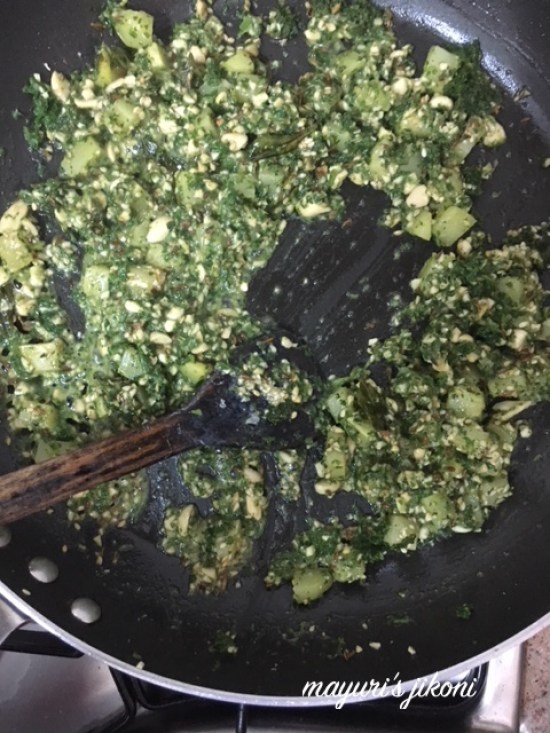
- Add the coarsely chopped peanuts and mix well.
- Add the green paste and mix well.
- Add cinnamon and clove powders, sugar and mix well.
- Add the buckwheat groat and lemon juice. Mix very well.
- Let the khichdi become hot over low heat, gently mixing it occasionally so it does not stick to the bottom of the pan.
- Serve khichdi on its own or with plain yogurt.
Notes
Adjust the spices /condiments according to your taste. I prefer less sugar and more lemon juice.
Buckwheat groat doesn't take long to cook so keep an eye as you don't want it mushy.
Add cubed paneer instead of potatoes if you like.
Pin for Later:


A little request:
If you do try this recipe then please either
- add a comment below,
- send a picture to my email mayuri.ajay.patel62@gmail.com
- tag me as #mayuri_jikoni on Instagram
- or tag me on Twitter as #Mayuri1962