


RECIPE : Bajri Na Dhebra/ Millet Fenugreek Flatbread
What is Bajri Na Dhebra/ Millet Fenugreek Flatbread?
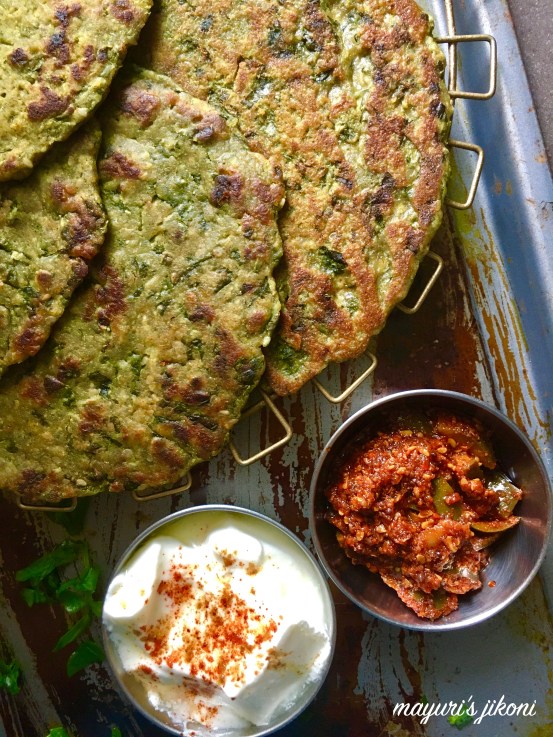
Bajri na Dhebra/ Millet Fenugreek Flatbread is a famous Gujarati snack prepared from pearl millet flour and loads of fresh fenugreek. Generally enjoyed hot for breakfast or as a snack. Usually Bajri na dhebra are served with some pickle and plain yogurt or masala tea. Bajri na dhebra can be carried as travel food. Long journeys many years ago meant that one had to carry travel food to enjoy on the way. Generally, Bajri na dhebra stay fresh for 2-3 days depending on the weather. However, if prepared as travel food, tamarind pulp is added instead of yogurt.
Memories
I remember my mum packing a pile of the dhebra for our train journey to Mombasa. Also, we would take them along for picnics and sometimes instead of handvo had dhebra while watching a movie at the drive-in cinema.
The very first time I made bajri dhebras was when I was around 14. My mum had gone to Kericho for a wedding and my grandmother insisted that she wanted to have some dhebra for dinner. I did try and convince her that she could wait till my mum got back but she was pretty adamant. ‘I will teach you how to make them’, she insisted. So under her watchful eye and guidance, I made horrible dhebras. They were shapeless, broken and a few got stuck on the tawa. Basically granny dear walked away with thick, thin, raw, overdone dhebras and I was left to clear the mess I had created in the kitchen.
I did not dare to tackle dhebras till I got married. While Nunu( my mother in law) would make them, I watched carefully and she would allow me to make the last 2 or 3. Now that she is far away, I have to make them myself as I love dhebras.
Pearl Millet – why include it in your diet?
Known as bajri or bajra in India, pearl Millet is very healthy and one should try and include it their diet more often. Luckily, in Mombasa I get fresh fenugreek throughout the year. As a result, bajri na dhebra are prepared often to enjoy as light dinner. I love to have them with plain yogurt while hubby loves them with milk. Some of the health benefits of pearl millet are:
- Excellent source of iron
- High in Protein
- Helps the digestive system as its high in fiber
- It is gluten free
- Rich in magnesium, makes it ideal for diabetics. It lowers insulin resistance.Magnesium is also helps to maintain a healthy heart.
- Helps to reduce bad cholesterol (LDL)
- Helps to maintain blood pressure as pearl millet is rich in potassium.
- Rich in Folic Acid, making it an ideal grain for pregnant women.
Pearl Millet Flour
Bajri na dhebra are made using pearl millet or bajri flour. This flour is slightly greyish in colour and has a nutty flavour. The flour doesn’t have a long shelf life so its best to buy in small quantities. If you do buy a large quantity best to store the flour in an airtight container in the fridge.
Some Recipes Using Pearl Millet/ Pearl Millet Flour
- Pearl Millet and Almond Cookies gluten free, refined sugar free and egg free.
- Savory Millet Pancakes – using pearl millet, kodo millet and barnyard millet.
- Raab/ Millet Flour Porridge – ideal for lactating mothers, to ward off colds and coughs and energy boosting food for the sick
- Bajra Idli
- Bajri and Moong Dal Khichdi
- Bajra na Rotla – famous pearl millet flatbread from Gujarat and Rajasthan. Its a part of the staple diet for many.
- Fresh Tuvar and Bajri Kadhi
- Bajri Methi Dhebra (vada) – deep fried snack
- On my list to try out is Renu’s Bajra and Split Moong Dal Khichdi
THE GROUP FOODIES _ REDOING OLD POSTS
The Group Foodies_Redoing Old Posts, started by Renu helps the members to make an effort to update old posts. This is the 55TH redoing old posts event. This group helps me to stay focused and update old posts not only with better photos but also trying to make each post more SEO friendly. Some of them I’m also trying to add videos. Check out my You Tube Channel MAYURI’S JIKONI
This week decided to redo BAJRI NA DHEBRA as many people wanted to see how I pat out the flatbread on a wet piece of cloth. So please don’t forget to watch the video. The recipe remains the same. However, have written the post in a more structured manner with new photos.
First Published on 18/04/2013 Updated on 23/07/2021


Ingredients required for Bajri na Dhebra/ Millet Fenugreek Flatbread
- Pearl Millet Flour – bajri flour
- Fresh Fenugreek – methi. Chopped and washed to remove sand particles. Drain out excess water by leaving the washed fenugreek or methi in a sieve for 15-20 minutes.
- Oat flour – I use oat flour for gluten free bajri na dhebra. However, you can replace it with wheat flour.(atta)
- Oil – required to add in the dough and also for roasting the flatbread or dhebra.
- Salt
- Carom Seeds – ajwain, ajmo
- Sesame Seeds – til, tal. Use the white one.
- Turmeric Powder – haldi
- Fresh Ginger – minced or paste
- Green Chillis – paste
- Garlic – minced or paste
- Jaggery Powder – gur in powder form or grated. Can replace it with white sugar or brown sugar.
- Plain Yogurt – dahi. Preferably one that is a bit sour
A bit more about bajri na dhebra
Bajri na Dhebra are usually called bajri thepla by non Gujaratis. However, bajri na dhebra are a bit different from thepla. First, the dough is very soft and cannot be rolled with a rolling pin. Generally the dough is patted into a circular shape using a plastic sheet or a wet cotton cloth. I prefer using the latter. Theplas dough is a bit stiff and rolled. Secondly, we add a lot of freshly chopped fenugreek, the flour is just used to bind it. When I first started making dhebra, mine were shapeless, but with practice they turn out fairly good now.

When you make them for the first time, make the dough a bit stiff. The roll it out in between two plastic or cling film sheets. As you gain confidence, you can make it softer and pat it into shape.
Using a wet cloth (the size of a handkerchief) is easier to transfer the patted flat dough onto the hot tawa or griddle. Lift the upper two corners of the handkerchief and layer it onto the tawa or griddle with the dough side on the tawa. Peel the cloth away slowly.
WATCH THE YOU TUBE VIDEO FOR THE FULL METHOD:
The video link is below…just scroll down

Don’t roast them over high heat as they will get burnt easily and remain raw. Best to cook them over medium to low heat. I prefer to dry roast both sides first and then brush with oil on both sides and cook further till done.
Generally bajri na dhebra taste best if they are sour and sweet with a bit more chillis. However, if you want, you can reduce the amount of jaggery or sugar used.
Dietary Tips:
- Gluten Free
- Vegetarian
- Ideal for Diabetics
- For Vegan version replace dairy yogurt with vegan yogurt or with tamarind pulp.
YOU TUBE CHANNEL:



BAJRI NA DHEBRA/ MILLET FENUGREEK FLATBREAD
Ingredients
- 4 cups Fresh Fenugreek finely chopped
- 1½ cups pearl millet flour
- ½ cup oats flour
- 2 tbsp oil
- 1 tsp carom seeds
- 1 tbsp sesame seeds
- ½ tsp turmeric powder
- 1¼ to 1½ tsp salt
- 1 tsp ginger paste
- 1 tsp green chilli paste
- 2 tbsp jaggery powder
- 1 tbsp garlic paste
- ½ to ¾ cup sour yogurt
- extra oil for shallow frying
- some water in a big bowl
Instructions
- Sieve the flours together into a big bowl. Add oil, jaggery, salt, turmeric powder, carom seeds, sesame seeds, ginger, garlic and chilli paste to it. Mix well with your fingers.
- Add the finely chopped fenugreek.
- Using the yogurt, form the flour mixture into a soft dough.
- Cover the dough with a lid or cling film and let it rest for 15 to 20 minutes.
- Put the tawa or frying pan on low heat.
- Take a chopping board or the one you use for rolling parathas.
- Take a small clean cotton cloth ( I use a ladies handkerchief) and rinse it under a tap. Squeeze out the water. Dampen the board with little water and lay the cloth over the board.
- Wet your hands in the bowl of water. Take a golf ball size of the dough, roll it into a ball and place it on the damp cloth.
- Wet your fingers again, and start patting the dough till you have a circle of nearly 6 to 7 inches in diameter. In between you may need to wet your fingers so that the dough does not stick to your fingers.
- Take a teaspoon full of oil and smear it over the hot tawa. I usually like to rub the oil all over the tawa with a kitchen towel.
- Take the two corners (the ones away from you) of the cloth and quickly place it on the tawa with the dough side down.
- Peel the cloth away.
- Let the dhebra cook on the underside for 2 to 3 minutes.
- Flip it over and let it cook for a minute or so.
- Brush oil on top and bottom of the flatbread. Cook both sides till brown specks appear.
- Place the debhra on a wire rack to cool.
- Dampen the cloth again and repeat the steps again till the dough is finished.
- Serve dhebras with pickle, plain yogurt or masala tea.
Notes
- If you feel working with the cloth will be difficult then form the dough using ¼ cup yogurt. The dough will be slightly stiff. Oil 2 cling film pieces. Place on on the oiled board and place the dough on it. Cover with the other cling film. Roll gently using a rolling pin. Peel away the top cling film.Wet your hand. Place your hand wide open over the rolled dough. Flip it over onto your hand, peel away the cling film and place the rolled dough on the tawa.
- Work with smaller size rolled debhras initially.
- My first debhra tends to stick to the tawa. Make a small wheat flour paratha or fry a bread slice on the tawa before you start making dhebras on it.
- Can replace the yogurt with tamarind pulp. Take about 2-3 tbsp and make up the required amount of liquid by adding water. That is, 2-3 tbsp of pulp and add water to make ½ or ¾ cup. Use this tamarind water to form the dough.
- Do not use high heat as the dhebra will get burnt. If the tawa becomes cool just let it become hot over low heat again.
Pin for Later:


A little request:
If you do try this recipe then please either
- add a comment below,
- send a picture to my email mayuri.ajay.patel62@gmail.com
- tag me as #mayuri_jikoni on Instagram
- or tag me on Twitter as #Mayuri1962